Nursery
The Early Childhood Nursery Program at The Common School provides a strong foundation for social, emotional, cognitive and physical growth and development. We use structures that support in-depth inquiry and investigation and multiple opportunities for personal choice and hands-on authentic experiences. Our overall approach to early childhood education encourages children to develop initiative, resiliency, confidence, and respect towards others. We work to foster a rich social environment within which children feel known and appreciated for who they are and come to value and celebrate each other’s unique contributions to the whole.
Classroom Environment
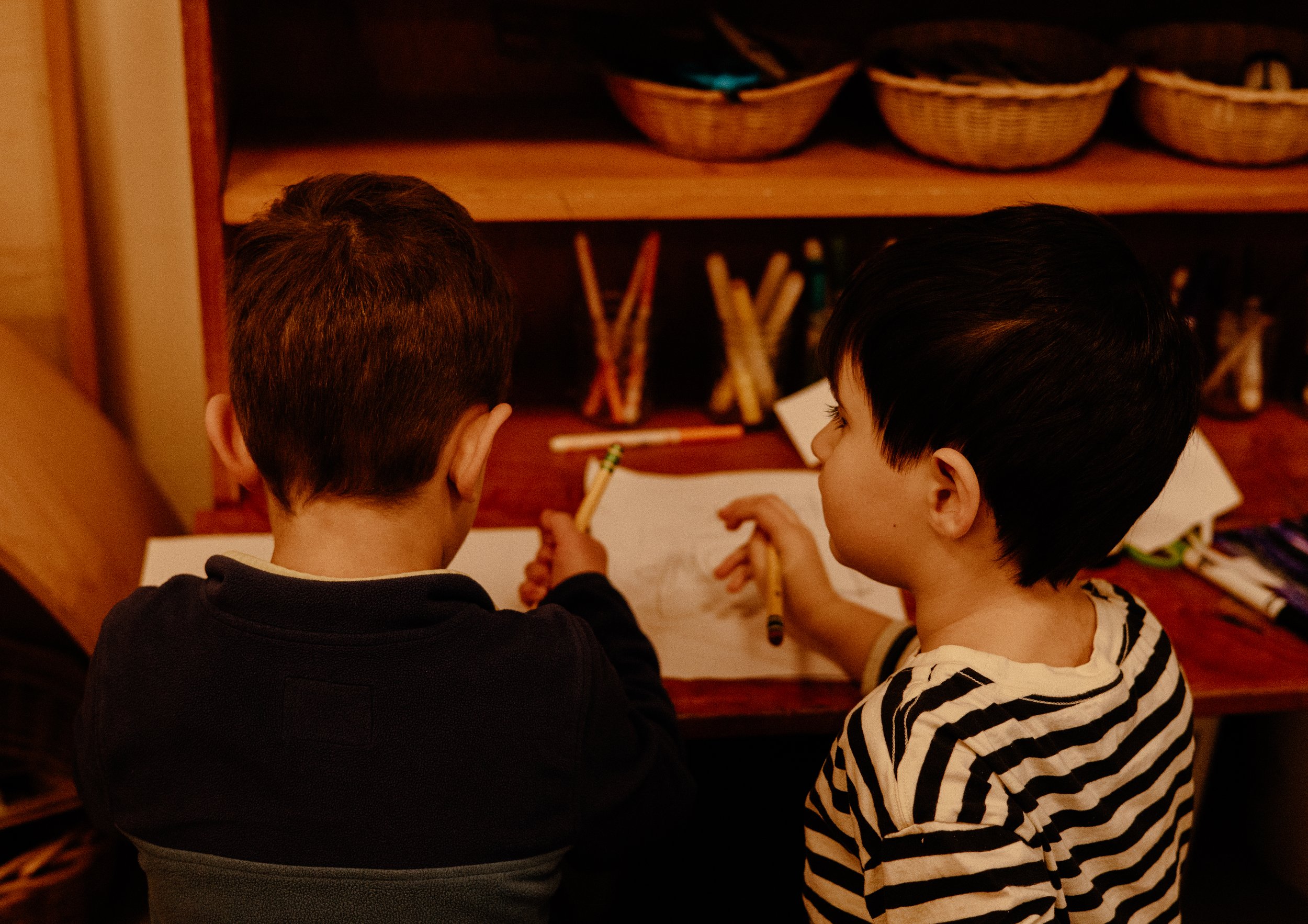
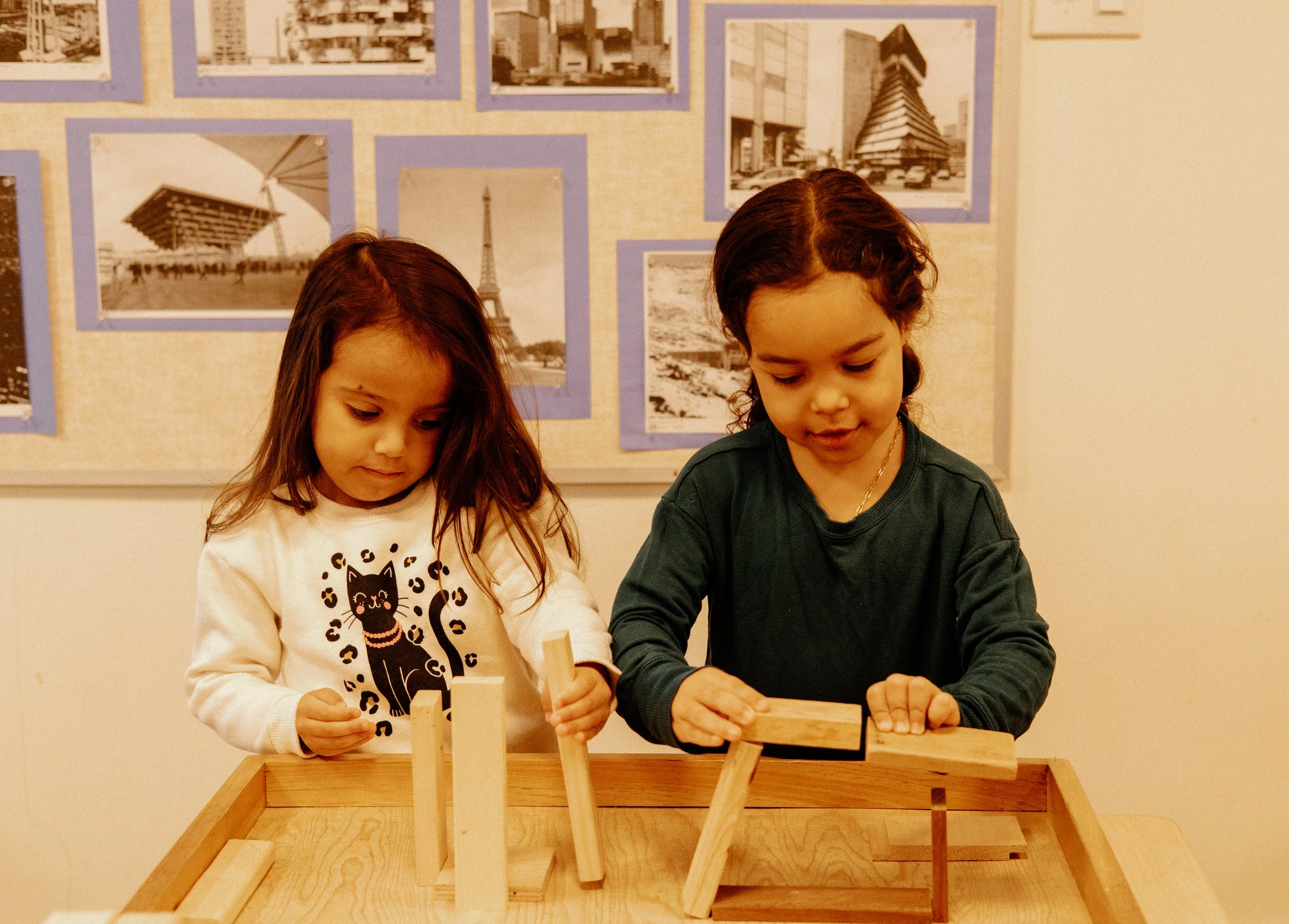
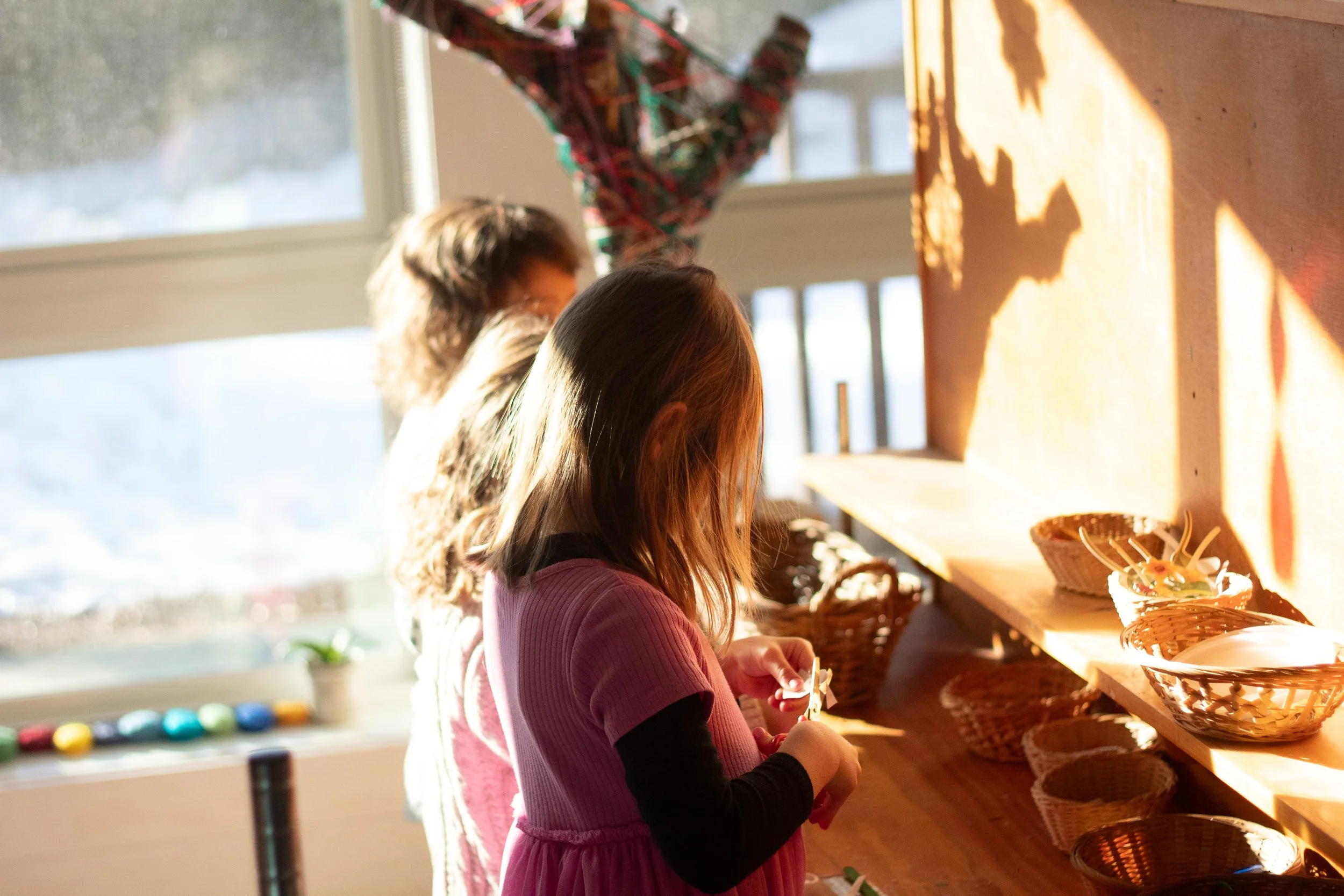
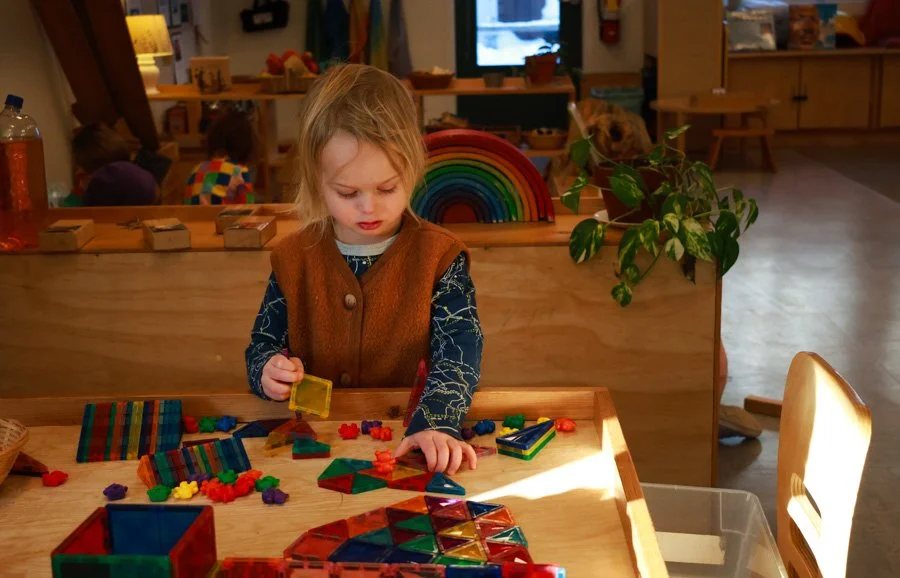
Classrooms are thoughtfully designed to support both group and individual exploration, encourage self-initiated activity, and spark children’s natural curiosity. Teachers nurture children’s interests, self-regulation, and confidence as they challenge themselves socially, physically, and cognitively. Typical daily options include blocks, easel painting, reading, drawing, writing, puzzles, sensory play, dramatic play, and makerspace activities. Teachers also develop curriculum based on children’s emerging interests to deepen engagement and thinking.
Outdoor Environments
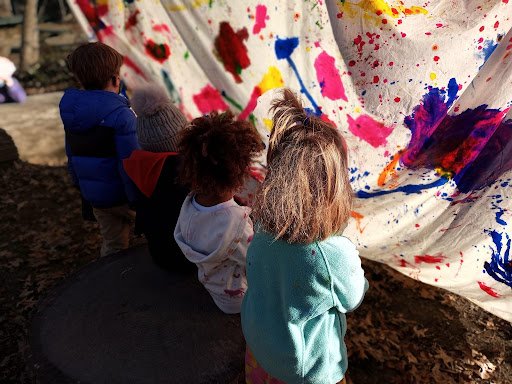
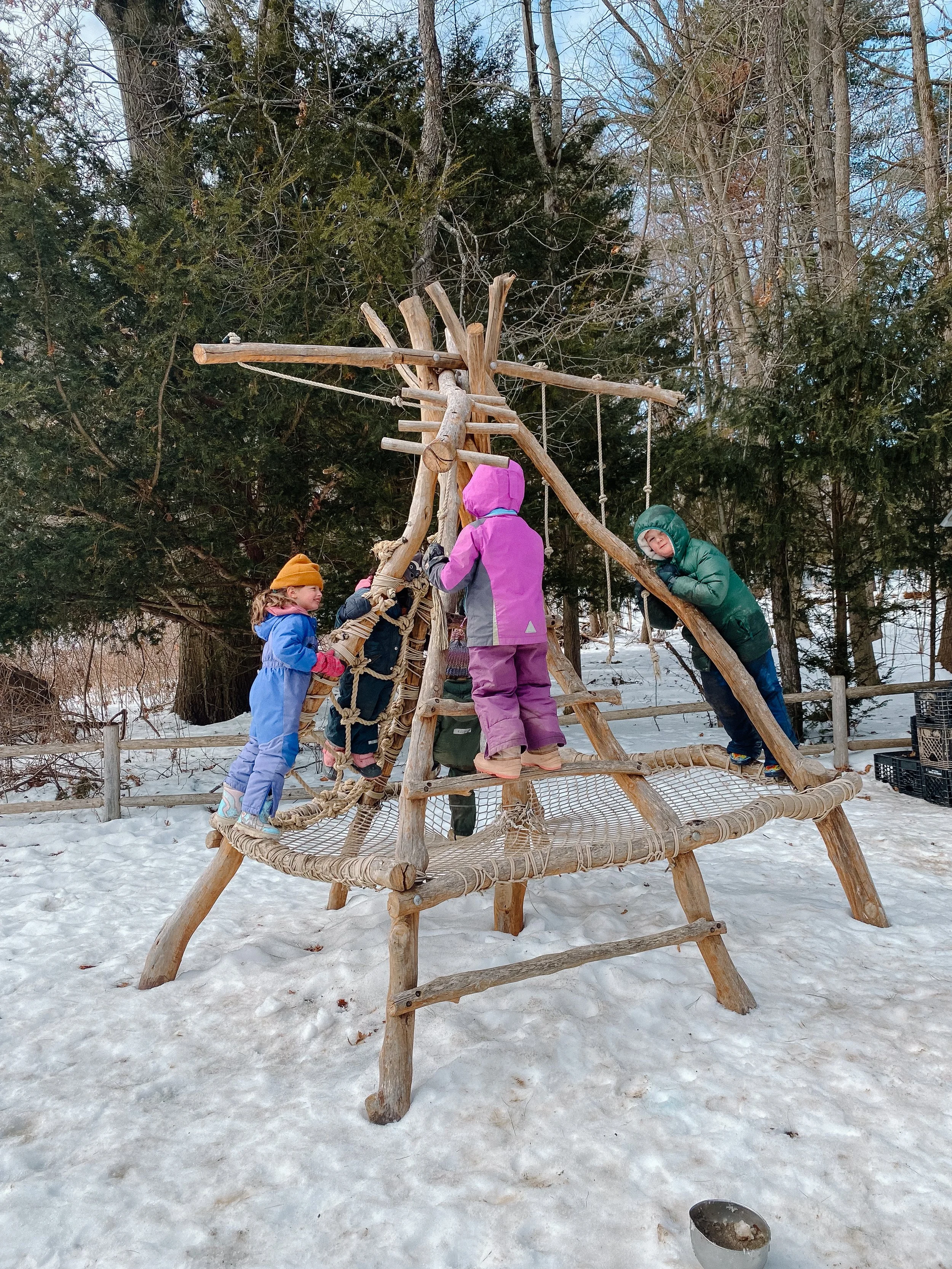
Our outdoor spaces—including playgrounds, the farm, and conservation lands—immerse children in nature while promoting motor skills, collaboration, and confidence through safe risk-taking.
BackYard: Features swings, climbers, sand, water, mud play, tree climbing, and loose parts like boards and crates that encourage physical coordination, problem-solving, and teamwork.
Children’s Garden: Filled with flowers, vegetables, garden tools, a mud kitchen, and a water catchment system, it supports gardening and scientific exploration. The compost bin is used school-wide.
Bramble Hill Farm: A working farm nearby where children participate in planting, harvesting, animal care, and seasonal festivals.
Sledding Hill and Adventure Yard: Accessible to all grades, these areas provide unique natural play and cross-age interaction.
Larch Hill: Conservation lands surrounding campus, visited regularly for “Woods Days.” Children explore nature through hikes, fort-building, bug hunting, and learning about plants and animals.
Co-Constructed Curricular Approach
Our curriculum centers on play, social-emotional growth, and inquiry-based learning driven by children’s interests and teacher observations. Topics vary from days to months and include both small groups and whole-class studies (e.g., Nature Journals, Butterflies, Maps, Identity). The arts and natural world provide rich opportunities for hands-on exploration and discovery. Academic skills in literacy, math, science, art, and physical development are integrated daily. Play remains central, supporting imagination, language, empathy, resilience, and academic readiness.
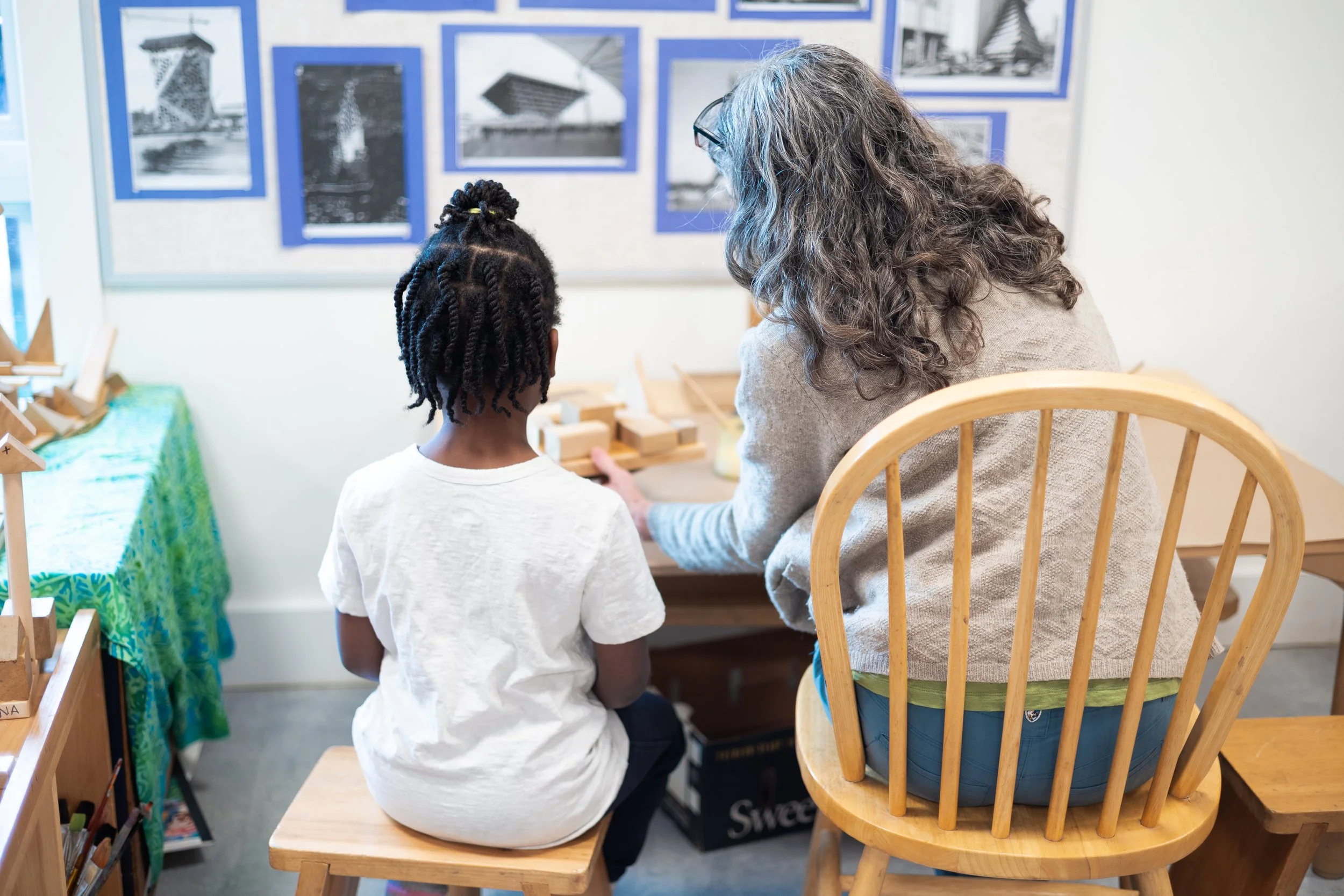

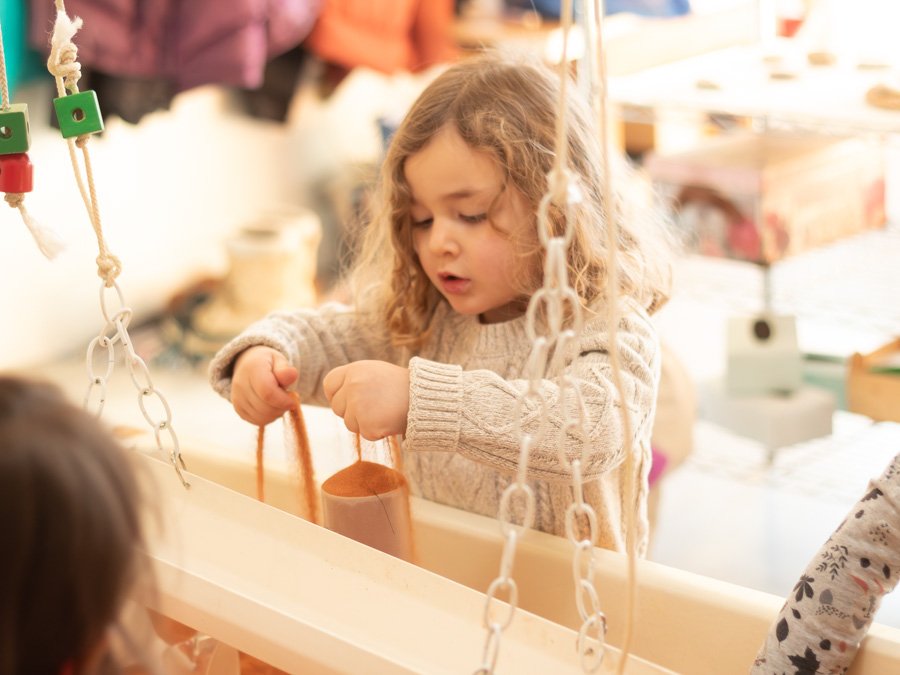
Peek into a Nursery classroom on any given day and you’ll find:
Students following their interests, organizing their own play, making choices and decisions, connecting and collaborating, and developing a sense of themselves as curious, competent, and resourceful people.
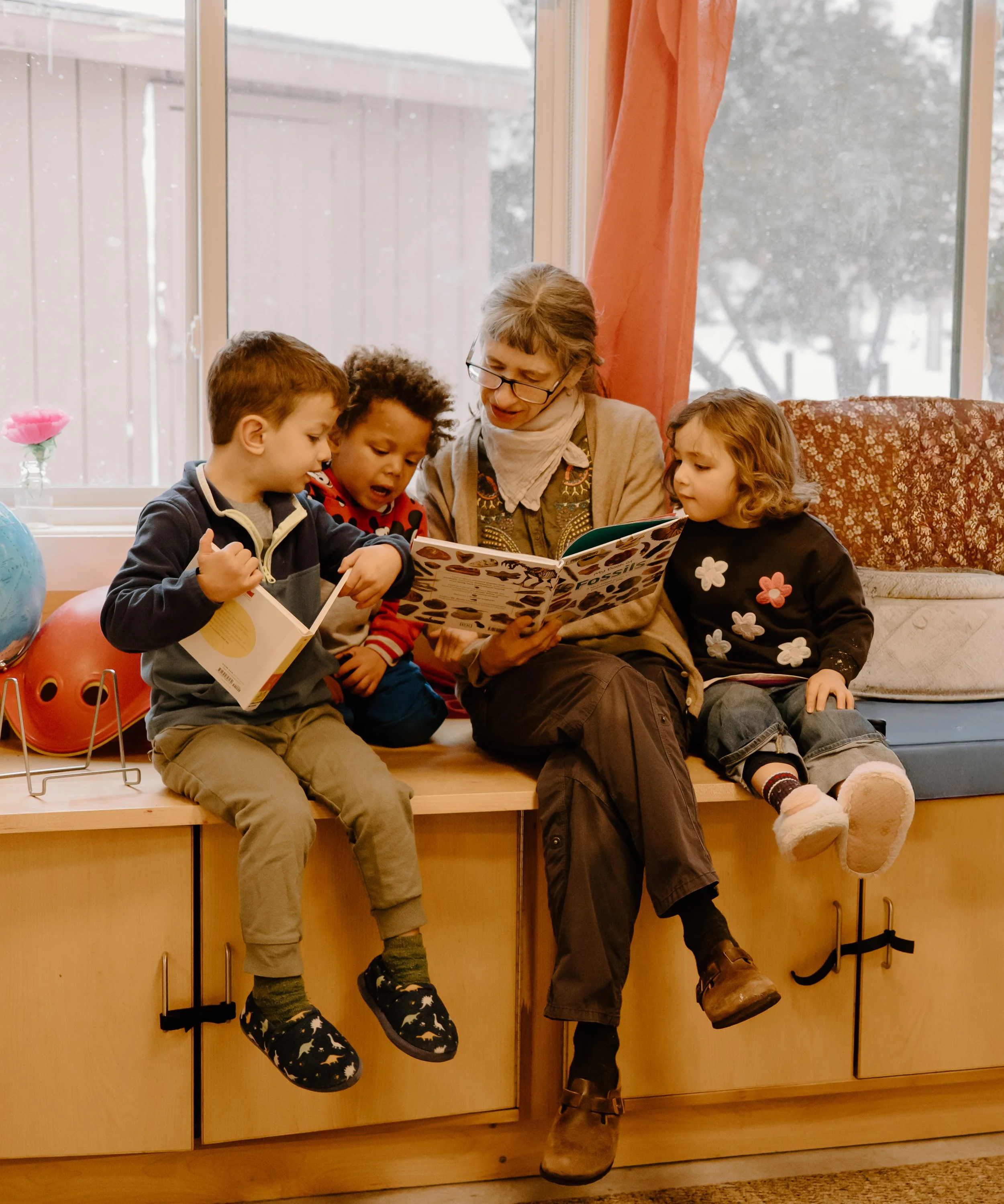
Plenty of books, stories, songs, drama time, and conversation to help students develop their burgeoning language skills
Opportunities to dance, run, jump, balance, regulate energy and get in touch with the body
Nursery Curriculum Highlights